
The application process involves meticulous attention to detail. Prior to bonding, surfaces must be thoroughly cleaned, ensuring they are dry and free from contaminants like oil. Cleaning involves the use of a solvent, followed by priming with metal primer and allowing complete drying.
The adhesive-to-hardener ratio for the glue mixture is 100g to 5g. This mixture is evenly coated on both the rubber and metal surfaces, left to dry for 15 minutes, and then pressed together for an effective bond.
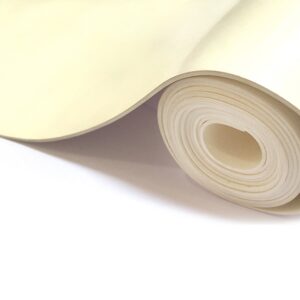
Neoprene bonding layers play a crucial role in rubber belting applications, extending the lifespan of the belt. This layer allows the belt to stretch, enhancing durability and reducing material build-up. Resistant to adverse weather, temperature, radiation, and more, the neoprene bonding layer ensures reliable performance.
With its high-strength and durable adhesion benefits, Metroseal’s neoprene bonding layer is compatible with various metals, offering versatility in application.
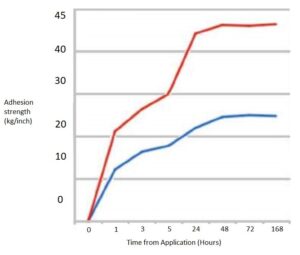
Cold Vulcanised Lagging Adhesion
 SBR/NR lagging – no bonding layer
 SBR/NR lagging plus buffed CN bonding layer
| Specification of Neoprene Bonding Layer | |
| Hardness | 40+/-Shore A |
| Specific Gravity | 1.4 gm/cm3 |
| Tensile Strength | 110 Kg/cm2 |
| Elongation | 450% |