Why anti-fatigue matting matters
The Health and Safety Executive notes that a higher proportion of workplace accidents occur after prolonged or successive shifts. Fatigue reduces concentration, slows reaction times and increases risk. The onus is on employers to manage these risks; anti-fatigue matting is one of the most practical, cost-effective measures available.
Softer underfoot surfaces activate small, continuous muscle movements in the legs that improve blood circulation and reduce the static load on joints and the lower back. The result is less physical strain, better comfort and fewer errors and injuries during long working periods. For employers, the return on investment is clear: reduced absenteeism, better morale and a more alert, productive workforce.
Benefits of anti-fatigue mats
- Comfort and support: cushioned surfaces reduce pressure on feet, legs or lower back and insulate against cold concrete floors
- Trip safety: non-slip mats feature bevelled edges to reduce trip hazards, while textured surfaces maintain grip in wet or oily conditions
- Improved circulation: micro-movements encouraged by softer surfaces activate leg muscles and promote better blood flow
- Noise and vibration reduction: rubber and foam grades absorb impact noise and dampen vibrations from machinery and foot traffic
- Chemical and grease resistance: anti-fatigue kitchen mats withstand oils, greases, cleaning agents and other substances common in catering environments
- Durability: industrial anti-fatigue matting maintains its cushioning and surface properties under sustained heavy use, without compressing or cracking
Types of anti-fatigue mats
- Rubber anti-fatigue mats: hardwearing and resilient, they are suited to manufacturing, workshops and environments with heavy foot traffic or wheeled equipment
- Oil-resistant mats: nitrile or specialist compound matting is suitable for areas that are subjected to cutting fluids, hydraulic fluid or fuel contact
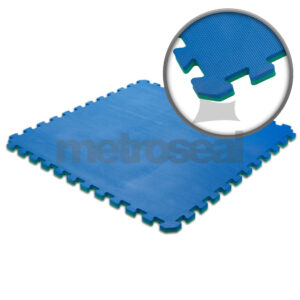
- Interlocking mats: the modular format covers larger floor areas without adhesive. These mats are easy to configure, reconfigure or partially replace
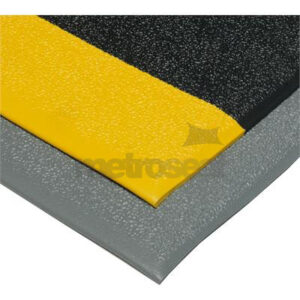
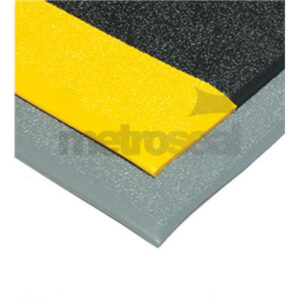
- Foam anti-fatigue mats: lightweight and highly cushioned, they are ideal for dry workstations, retail counters and packing stations where comfort is the priority
- Drainage mats: open-grid or perforated profiles allow liquids to drain away from the surface, maintaining traction and hygiene in wet environments
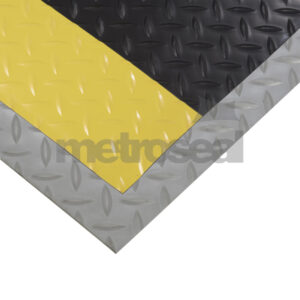
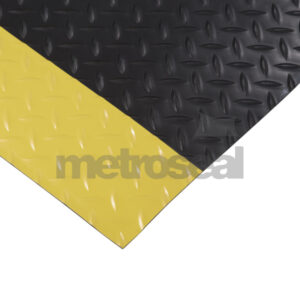
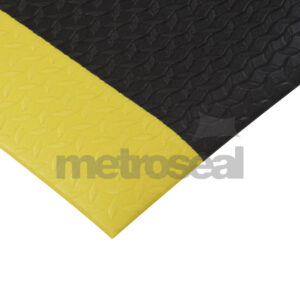
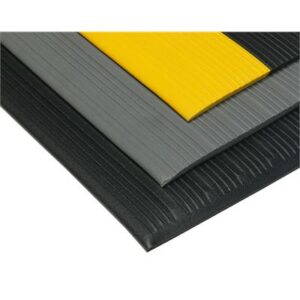
Anti-fatigue rubber mats can be laid loose for quick, flexible positioning or fitted as interlocking tiles for larger areas. Where a more permanent finish is needed, edges can be secured with double-sided tape or fully bonded with contact adhesive. Surface profiles include ribbed, bark, diamond and checker patterns.
Selecting the right anti-fatigue matting
The correct specification of anti-fatigue matting depends on the environment, the task and the duration of standing.
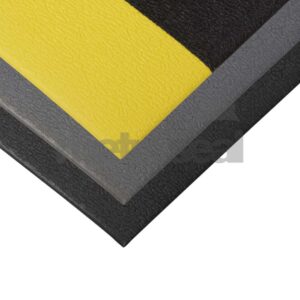
Dry workstations (assembly, packing, retail): PVC foam matting provides excellent cushioning, is lightweight, resistant to punctures and straightforward to clean
Heavy-use areas (warehouses, workshops, manufacturing): textured rubber runner or checker-style matting handles wheeled equipment and sustained foot traffic without deteriorating
Wet or oily spaces (commercial kitchens, engineering, processing): drainage or oil-resistant matting maintains grip and hygiene where liquids are regularly present
Static-sensitive areas (electronics assembly, clean rooms): anti-static matting dissipates electrostatic charge and is essential where sensitive components or equipment are handled
Long-standing tasks (checkout operators, machinists, laboratory staff): thicker, more cushioned products – typically 12mm or above
If you would like advice on selecting the right anti-fatigue mats for your workplace, our specialist team is here to help. Please call us, send us an email or complete our contact form for further assistance.